Thailand ■ Vietnam ■ Malaysia ■ Singapore ■ Taiwan ■ Macau ■ Hong Kong ■ South Korea ■ Russia
Cambodia invites budget travelers to explore a country where ancient empires meet resilient modern culture—and where your money can stretch further than you might expect. This Southeast Asian destination delivers world-famous landmarks, vibrant markets, and peaceful countryside within a compact geography that’s easy to combine in one trip. Whether you’re savoring sunrise over Angkor Wat, wandering French-colonial streets in Battambang, or relaxing by the river in Kampot, Cambodia proves that meaningful travel experiences don’t have to be expensive.
After decades of conflict, Cambodia has rebuilt itself into a destination that honors its heritage while welcoming visitors with warmth. Its history is complex: it was once the seat of the mighty Khmer Empire and later endured a devastating period under the Khmer Rouge. Today, communities are forward-looking, creative, and proud to share their culture with guests. That resilience adds a deeper dimension to your trip—you’re not only sightseeing; you’re also engaging with a country that continues to preserve, heal, and develop.
This cornerstone guide is designed for budget-conscious travelers who want depth and context as well as cost-saving tips. You’ll discover which attractions are essential, how to organize an itinerary without wasting time or money, where to find cheap hotels in Cambodia, and how to balance high-impact sights with low-cost experiences. By the end, you’ll have a detailed plan for budget travel to Cambodia that keeps costs realistic without sacrificing the richness that makes the country unforgettable.
Understanding Cambodia: Culture, History and Practicalities
A Country Shaped by Empires and Resilience
To appreciate Cambodia fully, it helps to understand its historical context. For centuries, the Khmer Empire dominated large parts of mainland Southeast Asia. Evidence of this golden age lies scattered across Cambodia’s northern plains in the form of monumental temple complexes and ingenious irrigation systems. The Angkor Archaeological Park near Siem Reap represents the pinnacle of this civilization, spanning a vast landscape of temples, reservoirs, canals, and ancient city plans that testify to an exceptional society.
By the fifteenth century, the Khmer Empire declined, and Cambodia entered a long period shaped by shifting regional power and internal struggle. In the nineteenth century, the royal court established Phnom Penh as the capital, and the Royal Palace complex rose as a symbol of monarchy and continuity. The twentieth century brought colonial rule, independence, war, and one of the most tragic chapters in modern history under the Khmer Rouge. Sites like the Tuol Sleng Genocide Museum in Phnom Penh preserve memory and offer critical context for understanding Cambodia’s recent past.
Cambodia’s resurgence is one of its most compelling stories. Cultural traditions are actively practiced, historic sites are protected, and tourism increasingly supports local livelihoods through small businesses, community initiatives, and artisanship. Traveling thoughtfully—choosing responsible operators, respecting cultural spaces, and spending locally—helps sustain what makes Cambodia special.
Essential Travel Information for Travelers
Entry and visas: Visa rules vary by nationality and can change. Cambodia commonly offers tourist visa options such as e-visa and visa-on-arrival for many travelers, but requirements differ. Before you book, confirm current rules through official Cambodian government channels or a Cambodian embassy/consulate. Immigration may ask for proof of onward travel, accommodation details, or evidence of sufficient funds depending on your circumstances.
Money matters: The official currency is the Cambodian riel (KHR), but US dollars are widely used in cities and tourist areas. It’s common to pay in USD and receive change in riel. Carry small bills and avoid relying on large notes, especially in markets and for short rides. In rural areas and local markets, cash is essential; outside larger hotels and restaurants, card acceptance can be limited.
Seasons and weather: Cambodia has a tropical climate with two main seasons. The dry season generally runs from around November to April, which is ideal for temple visits and long days outdoors. The wet season generally runs from around May to October, when landscapes turn lush and crowds often thin out. Rain commonly arrives in bursts rather than nonstop, but conditions can affect dirt roads in remote areas. April is often the hottest month—plan midday breaks and hydrate.
Language and etiquette: Khmer is the national language, but English is common in tourist zones. Learning a couple of phrases—like a simple greeting and “thank you”— is appreciated. Cambodia is generally modest in dress norms, especially at temples and religious sites: cover shoulders and knees, remove hats in sacred spaces, and keep voices low.
Siem Reap and the Angkor Region: Cambodia’s Crown Jewel
Angkor Wat: An Architectural Icon
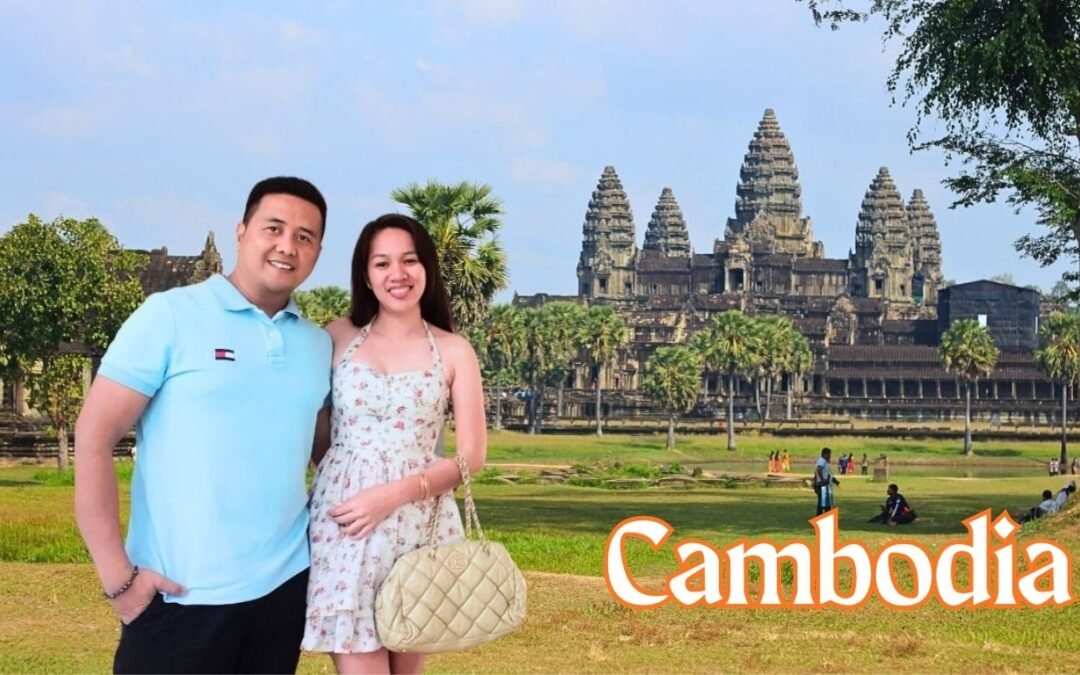
No trip to Cambodia is complete without Angkor Wat, the world’s largest religious monument and the centerpiece of the Angkor Archaeological Park. Originally built in the early twelfth century as a Hindu temple dedicated to Vishnu, it later transitioned into a Buddhist site and remains spiritually significant today. Unlike many Angkor-era temples, Angkor Wat faces west, and its iconic silhouette—five lotus-like towers rising above galleries and a wide moat—has become a national symbol.
For the classic experience, arrive before sunrise. As the temple’s towers emerge from darkness and reflect in the lotus-filled water, the atmosphere feels almost unreal. Once inside, slow down for the bas-relief galleries: epic scenes, processions, and celestial dancers carved with astonishing detail. Because Angkor Wat is vast, bring water, sun protection, and shoes you can walk in for hours.
Angkor Thom and the Bayon: Faces of the Khmer Empire
North of Angkor Wat lies Angkor Thom, the last great capital of the Khmer Empire. Crossing the moat and passing through monumental gates sets the tone for what follows. At the center is the Bayon, famous for its serene stone faces carved into towers. The corridors feel like a maze—dark passages opening to sudden terraces, steep stairs leading to viewpoints where the faces seem to watch from every angle. It’s one of the most atmospheric sites in the complex and rewards patient exploration.
Ta Prohm: Where Nature and Architecture Embrace
Ta Prohm delivers the “jungle temple” image many travelers imagine: enormous trees and roots weaving through walls, wrapping doorways and pressing into stone like slow-motion sculpture. While many temples were cleared of vegetation, Ta Prohm was left partly overgrown to show how nature reclaimed abandoned cities. Visit early or late in the day to avoid tour-bus surges.
Other Angkor Temples Worth Visiting
Beyond the big three, the Angkor region is full of temples that feel more intimate and, at times, more peaceful. Preah Khan offers long corridors and layered courtyards; Banteay Srei is famous for intricate pink sandstone carving; East Mebon sits on what was once an island in a reservoir; Phnom Bakheng is a popular sunset viewpoint (crowded, but still memorable if timed well).
Plan efficiently: Angkor is huge. Group temples by location to avoid backtracking. A practical approach is to do the headline sites in one day (Angkor Wat, Angkor Thom/Bayon, Ta Prohm) and dedicate another day to farther locations like Banteay Srei and a cluster of northern temples. Build a midday break into your plan—heat and fatigue are budget killers because they push you into extra drinks, transport, and shorter visits.
Siem Reap Town: Markets, Nightlife and Local Life
Siem Reap has evolved from a quiet town into a lively base for Angkor. It remains compact and walkable, with a social center around Pub Street and the Old Market area where you’ll find budget meals, stalls, and late-night energy without expensive cover charges. An evening wander here—snacks, street music, and people-watching—is a classic Siem Reap experience.
For a slower pace, explore markets in daylight. Old Market (Psar Chaa) sells produce, spices, textiles, and daily essentials. Nearby, galleries and fair-trade shops showcase local crafts with more transparent sourcing. A walk along the river is a simple, low-cost break from the bustle. Many of the best moments in Siem Reap happen unplanned: a fruit shake in the heat, a conversation with a vendor, or a quiet street at dusk after the crowds thin.
Exploring Phnom Penh: Heritage and History
The Royal Palace and Silver Pagoda
Phnom Penh sits at the confluence of major rivers and feels like a city of contrasts: colonial-era buildings beside modern development, bustling markets near tranquil temples. The Royal Palace is the architectural heart of the capital, with gilded roofs, manicured grounds, and ceremonial halls that reflect Cambodia’s monarchy and artistry. Within the complex, the Silver Pagoda is a highlight, known for its shining floor and revered statues and treasures.
Dress modestly here—shoulders and knees covered—and plan to go earlier in the day to avoid peak heat. If you’re traveling on a budget, the palace visit is high value: it compresses history, design, and cultural symbolism into one walkable site.
Riverside Promenades and Local Markets
The riverfront is one of Phnom Penh’s best free experiences. Locals gather in the evening for walks, exercise, snacks, and conversation as the sun drops over the water. Sitting on the edge of the promenade and watching daily life is a budget-friendly ritual that also makes you feel connected to the city.
For markets, Central Market (Phsar Thmei) is a landmark with a distinctive dome and long wings packed with goods. It’s great for browsing jewelry, textiles, clothing, souvenirs, and local food. Russian Market (Tuol Tompoung) is known for crafts and textiles, while smaller neighborhood markets offer everyday Cambodia—produce, household items, and street snacks.
Confronting Cambodia’s Recent History
Phnom Penh also holds space for remembrance. The Tuol Sleng Genocide Museum (S-21) documents the Khmer Rouge period through photographs, testimonies, and preserved rooms in a former school that was converted into a prison. Many travelers pair this with a visit to Choeung Ek (one of the “Killing Fields”) outside the city, where memorial structures honor victims.
These visits can be emotionally heavy. Build in quiet time afterward—walk along the river, find a calm café, or return to your accommodation to reflect. Understanding this history helps you grasp Cambodia’s resilience and why preserving memory remains important.
Battambang: Cambodia’s Colonial Charmer
Battambang, Cambodia’s second-largest city, offers a slower rhythm than the main tourist hubs. Set amid fertile plains, it’s often described as part of Cambodia’s agricultural heartland. Along the river, colonial-era shop-houses and quiet streets create a laid-back atmosphere that’s easy to explore on foot or by bicycle.
Highlights include temples and hilltop viewpoints outside town, plus cultural pockets inside the city—art spaces, small cafés, and local markets. Many visitors enjoy Battambang not because it’s packed with “big-ticket attractions,” but because it feels lived-in and authentic. It’s a strong stop if you want a calm base, a chance to cycle the countryside, and a break from fast-paced sightseeing.
- Wat Ek Phnom: A modern pagoda near older ruins, showing layers of religious continuity.
- Prasat Banan: A hilltop temple with rewarding views after a stair climb.
- Phnom Sampov: A limestone outcrop with viewpoints and caves that carry historical weight.
- Bamboo train (norry): A quirky ride that offers a glimpse into local ingenuity and rural scenery.
Kampot and Kep: Riverine Relaxation and Coastal Charm
For travelers who want to slow down, southern Cambodia delivers: Kampot’s river life, Kep’s coastal calm, and countryside landscapes that feel restorative after temple days. Kampot has a quiet charm tied to its riverside setting and old-town architecture. Days here can be delightfully simple: café mornings, river sunsets, and low-cost exploration by scooter or bicycle.
The region is also known for pepper plantations producing Kampot pepper, famous for its aroma and culinary reputation. Visiting a pepper farm adds variety to your itinerary and can be done as a half-day trip. Other easy activities include small caves, salt fields, and nearby highland areas where temperatures can be cooler than the lowlands.
- Riverside walks and boat trips: Ideal for sunsets and relaxed evenings.
- Pepper farms: Learn about cultivation and taste local products at the source.
- Caves and countryside routes: Combine small stops for a budget-friendly day of exploring.
Kep is known for its seafood culture and quiet seaside mood. A trip to Rabbit Island (Koh Tonsay) is a classic low-key day out if conditions are good. Kampot and Kep are excellent for travelers who want balance: fewer “must-do” expenses, more breathing room.
Cambodian Islands and Other Side Trips
Cambodia’s islands in the Gulf of Thailand offer beaches, jungle paths, and easygoing days. Koh Rong and Koh Rong Samloem range from lively areas to quieter stretches. These trips are best for longer itineraries, because reaching the coast and transferring by ferry takes time and money. If you go, slow down—staying multiple nights usually feels better value than a rushed overnight.
Other deeper excursions include Cambodia’s northeast provinces for nature and indigenous cultures, Tonlé Sap experiences, or remote temples near borders. These options are rewarding but require more planning, time buffers, and transport considerations—ideal for longer trips or return visits.
Budget-Saving Tips and Smart Travel Strategies
Prioritize Walkability and Location
Location is your biggest budget tool. Staying where you can walk to food, markets, and transport hubs reduces tuk-tuk spending and saves time. In Siem Reap, staying near the Old Market/Pub Street zone keeps essentials close; in Phnom Penh, central areas near major sights minimize rides. Battambang’s river area and Kampot’s old town are similarly compact. Walkability also improves the trip: you discover side streets, small pagodas, and daily life that tours often miss.
Use Tuk-Tuks Strategically
Tuk-tuks are convenient but can quietly become your largest daily expense if you use them for every short trip. Agree on the price before you ride. In major cities, ride-hailing apps may offer more transparent pricing. When exploring Angkor, hiring a driver for the day is common—confirm the route, timing, and total cost upfront, and tip fairly for good service.
Plan Temple Days Efficiently
Angkor’s scale rewards structure. Avoid backtracking by clustering nearby temples. Start early for cooler weather and smaller crowds, then take a midday break to avoid heat exhaustion. Bring water and snacks to reduce impulse spending at entrances. If you’re doing multiple days, alternate a heavy temple day with a lighter city day to prevent burnout.
Eat Where Locals Eat
Cambodian food is one of the easiest ways to keep costs low while increasing authenticity. Local eateries and markets serve flavorful staples—no need for expensive restaurants. Look for stalls that are busy with locals; turnover usually means fresher food. Avoid tap water; use bottled water or a reputable refill/filtration method.
Manage Your Market Spending
Markets are fun—and dangerous for budgets. Browse early, compare prices, and delay souvenir purchases until you’ve seen options in multiple places. Bargaining is common; keep it friendly and be ready to walk away. Decide a souvenir budget ahead of time and stick to it.
Keep Cash and Small Bills
Carry small denominations for markets, transport, and snacks. Vendors may not have change for large bills. Use ATMs strategically to reduce repeated fees and plan your daily spend so you don’t withdraw too often.
Balance High-Impact and Low-Cost Experiences
A strong Cambodia itinerary blends paid highlights with free or low-cost moments: river walks, neighborhood wandering, temple visits beyond the biggest names, and simple downtime in parks and markets. This mix keeps your energy stable and your spending predictable—and it often produces the most memorable “real life” moments.
Choosing Accommodation: Best Areas for Budget Travelers
Cambodia offers accommodation for nearly every budget—dorm-style hostels, guesthouses, and value hotels. The key is not only price but also placement. Being close to attractions and transport reduces your overall cost more than chasing the absolute cheapest room far from everything.
Siem Reap
The most convenient base is near the Old Market and central areas where restaurants, markets, and pickup points are walkable. If you want quieter nights, stay a few blocks away from the busiest streets. This is often the sweet spot for cheap hotels in Cambodia that still feel comfortable and practical.
Phnom Penh
Central areas near the riverside and major landmarks are ideal for walking and short rides. Look for places with good safety and cleanliness patterns in reviews, and confirm whether you’ll need transport late at night if you plan to explore after dark.
Battambang
Riverside stays are convenient and calm. Many accommodations offer bike rentals or can connect you with local drivers for countryside routes, which helps you keep day trips efficient.
Kampot and Kep
In Kampot, staying near the old town and riverfront reduces transport needs. In Kep, staying near the coast and crab market keeps evenings easy—walkable dinners and low-key beach time without extra rides.
Book earlier in peak months and around major festivals to avoid last-minute price jumps and limited availability—especially in Siem Reap during high season.
The Best Time to Visit: Weather, Festivals and Crowds
The dry season is generally the easiest time for temples and long days outdoors, which is why it’s also the busiest. If you want fewer crowds and potentially better accommodation value, consider shoulder periods and the early or late edges of the rainy season. Rainy months can be excellent for photography—greener landscapes and moody skies—if you plan sightseeing in mornings and keep flexibility for afternoon showers.
Cambodia’s festival calendar adds cultural depth but can increase demand. Khmer New Year (mid-April) is vibrant but hot and busy. Other major celebrations can affect transport and accommodations. If your trip overlaps a festival, book buses and popular stays earlier and build more buffer time into travel days.
Sample 3-Day Itinerary: A Balanced Approach
This itinerary balances depth, cost efficiency, and realistic pacing. Adjust based on arrival times, interests, and energy levels. For longer trips, treat this as a “core structure” you can expand.
Day 1: Phnom Penh – Culture, Markets and Riverside
- Morning: Start with a city orientation walk and a market visit (Central Market or a neighborhood market). Snack lightly and save time for sights.
- Midday: Visit the Royal Palace and Silver Pagoda. Eat a simple Khmer lunch nearby and rest during peak heat.
- Afternoon: Choose a history-focused visit (Tuol Sleng museum) or a cultural/temple stop depending on your preference. Keep the schedule light if you choose the heavier option.
- Evening: Stroll the riverside. Eat street snacks or a modest dinner, then rest—your next day will likely involve travel.
Day 2: Travel to Siem Reap and Town Exploration
- Morning: Travel to Siem Reap by bus or other budget-friendly transport. Bring water, snacks, and patience—overland travel can run on flexible timing.
- Afternoon: Check in, then walk the town: Old Market area, river paths, and practical stops (ATM, pharmacy, pickup points).
- Evening: Explore night markets and central streets. Keep spending controlled by sampling a few street foods rather than stacking full meals and drinks.
Day 3: Angkor Highlights
- Pre-dawn: Leave early for Angkor Wat sunrise. Bring water, a small light, and sun protection.
- Morning: Angkor Wat, then Angkor Thom and Bayon. Go slow—rushing creates fatigue and extra spending.
- Midday: Break during the hottest hours. Rest and refuel.
- Afternoon: Ta Prohm, then add one optional temple if energy allows. Return to town for a simple dinner and recovery.
Optional extension: If you have extra days, add a slower day in Siem Reap—artisan workshops, cycling routes, or a calm lake/river experience. Alternatively, add Battambang or Kampot for a different pace and scenery.
Cambodia on a Budget
Cambodia is where world wonders meet everyday life, offering profound historical sites alongside humble pleasures. With thoughtful planning, budget travel to Cambodia is not only possible—it’s genuinely rewarding. You can watch sunrise at Angkor, wander colonial streets, reflect at important memorials, enjoy riverside sunsets, and eat well in local markets while still staying within a realistic budget.
What makes Cambodia truly memorable is its resilience and warmth. Temples stand not as relics, but as living symbols of faith and craft. Cities balance tradition with modern creativity, and smaller towns invite you to slow down and appreciate daily routines. By choosing walkable neighborhoods, using tuk-tuks wisely, planning temple routes efficiently, eating locally, and blending paid highlights with free experiences, you’ll find that cheap hotels in Cambodia and affordable attractions in Cambodia are not just search terms—they’re real, practical travel choices.
Travel respectfully, stay flexible, and stay curious. Cambodia often rewards travelers most when they leave room for the unplanned: a quiet pagoda at dusk, a market conversation, a roadside snack, or a sunset that makes you pause. Those moments tend to cost the least—and stay with you the longest.